
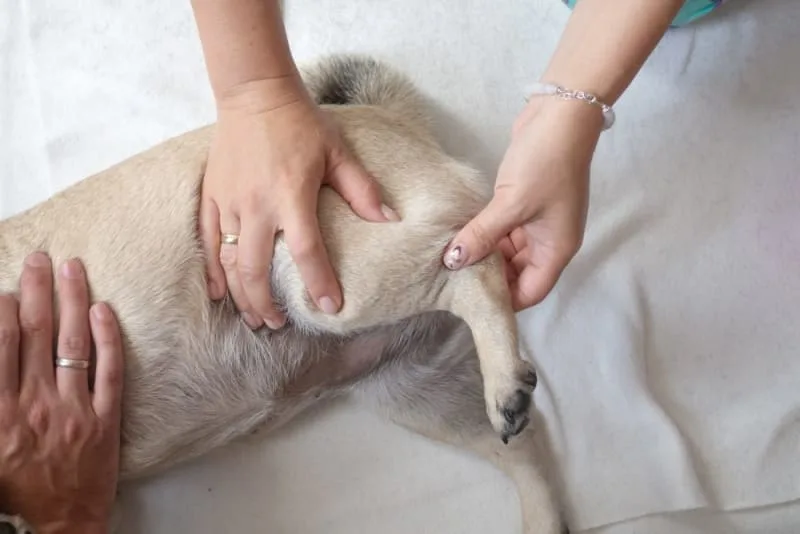
We suggest checking out this article if your pet's back legs seem weak. Our Clearlake vets can guide you on enhancing or preserving their leg strength.
What Causes Sudden Hind Leg Weakness in Dogs?
Several factors can cause your pet's back legs to weaken. Let's take a look at some of these reasons.
Arthritis
Dogs, like people, can get arthritis. One kind, called osteoarthritis mostly affects their back legs. This occurs when their joints don't have enough fluid, causing pain when they move. If your dog shows these signs, it's a good idea to see a vet.
Difficulty climbing stairs or walking
Bunny hopping while moving
Development of large front-leg muscles and weakening of rear-leg muscles
Hip Dysplasia
If your pet's hip joints feel more flexible than usual, it might indicate hip dysplasia. This can affect their balance and, in severe cases, lead to osteoarthritis. It's more often seen in bigger dog breeds, such as:
German Shepherd
Labrador Retriever
Saint Bernard
Great Dane
Hip dysplasia is primarily caused by genetics, but other factors such as size, weight, and overuse may also play a role in developing this condition.
Canine Degenerative Myelopathy
Your pet might have degenerative myelopathy, a condition where their nerve coverings wear down, leading to problems with nerve function. Look for these symptoms:
Quivering hind legs
Hind legs coming together while standing
Feet positioned at unusual angles
Many breeds of dogs are susceptible to developing a spinal condition, but certain breeds, such as:
Boxer
German Shepherd
Cardigan Welsh Corgi
Rhodesian Ridgebacks
Diabetes
Did you know that diabetes can make your pet's back leg joints weak? When the body doesn't produce enough insulin, it can cause unusual blood sugar levels, which might lead to this issue. Watch out for signs such as more thirst and hunger, loss of bladder control, and weight drop. If you see these signs in your dog, it's a good idea to talk to a vet and get a blood test to be sure.
Fibrocartilaginous Embolism
Fibrocartilaginous embolism (FCE) is a condition that can affect dogs, where a small piece of cartilage blocks their bloodstream, leading to spinal swelling. The result is temporary hind leg movement restriction and pain, which is especially common in larger dog breeds. Breeds such as German Shepherds and Irish Wolfhounds often receive a diagnosis of FCE.
Limited Mobility
If your pet undergoes a surgical procedure like tibial plateau leveling osteotomy (TPLO) to improve their leg movement, they might have to reduce their physical activities as per the surgeon's recommendation during the healing process. This temporary limitation is essential to ensure a complete and successful recovery.
What are the main signs and symptoms dog's back legs not working?
Solving the main issue on your own might be tough since the symptoms for these conditions are alike. To handle this, it's vital to consult a vet without delay. If you observe any of these behaviors in your dog, acting quickly is key:
Hind leg tremors
Swaying of the hind end
Trouble transitioning from lying or sitting to a standing position
Difficulty walking or complete inability to walk
Inability to climb stairs
Sudden reluctance to go for walks or play
Stumbling and lack of coordination
Muscle mass loss
Decreased walking speed in general
Collapsing
Tips on How to Strengthen old dog's hind legs
After identifying why your pet is upset and getting treatment advice, you can also support their healing and energy recovery through non-medical steps.
It is recommended to take your furry companion for brief yet consistent walks on a daily basis. This will aid in gradually restoring their hind-leg muscles.
Let your dog swim in a safe place. Swimming provides a low-friction way to work their muscles and benefits their overall strength.
As dogs age, their metabolism slows down, and excess weight can strain, weakening legs. To prevent this, ensure your pet enjoys a healthy diet with lean, protein-rich foods.
One way to support your pet's joint health and mobility is by giving them supplements that contain Omega-3 fatty acids. These supplements can help reduce inflammation and provide extra nutritional support for aging joints.
Inflammation-reducing treatments such as acupuncture, cold laser therapy, and alternative therapy can greatly address limited mobility and reduce pain.
Alternative ways to alleviate discomfort
If your dog can't do strengthening exercises anymore, it might be time to try other things to make them feel better. You could use things like a wheelchair, a harness to lift their back end, or a hip brace.
These tools will help your dog have some freedom and stay active in the warmer months.
As pets get older, they need regular check-ups and finding problems early to keep them feeling good. Our vets at Clearlake are experts at helping older pets stay healthy. They find and treat problems early and give proactive care that's easy to manage.
Learn more about Geratric Care
Are you concerned that your dog may be experiencing weakness in their hind legs? Schedule an appointment with the veterinarians at Clearlake Veterinary Clinic today.
